
17 October
The WNO have given us a glorious retelling of Voltaire’s comic satire on Leibnizian reasoning whose eponymous hero’s baffling optimism survives the evidence of all the enormities that humanity can inflict on itself: war, rape, slaughter, theft, judicial torture, slavery and the rest. Not to mention natural disaster. The idea that a perfect God has created the perfect world is clearly, Voltaire concludes, thoroughly absurd. Greed, hypocrisy and sadism seem to be the driving qualities of humanity rather than a quest for an albeit impossible perfection.
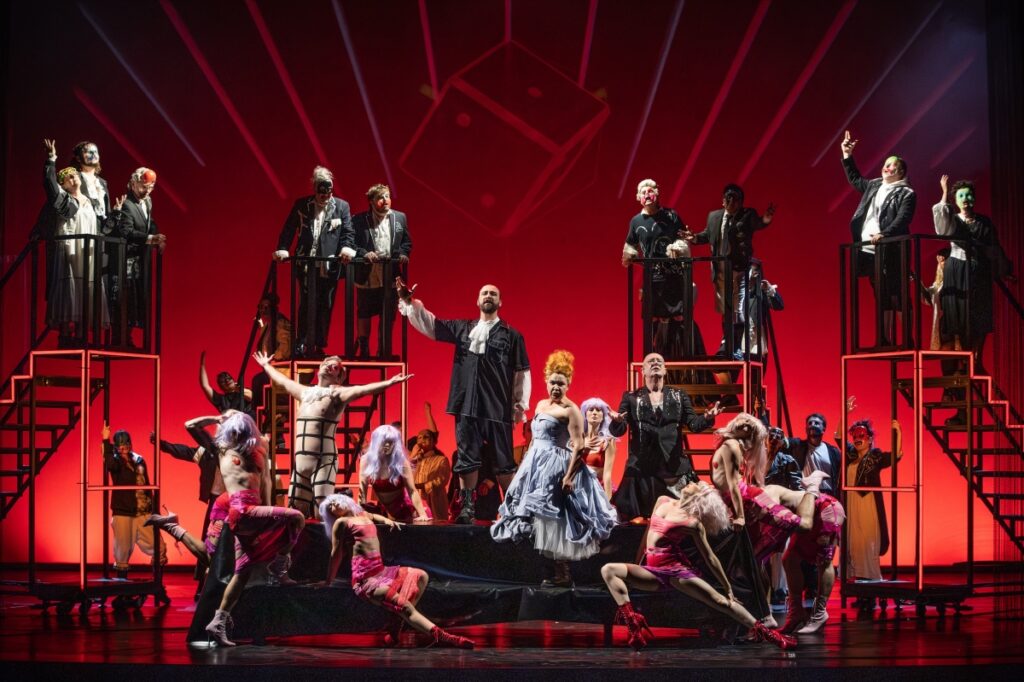
There can hardly be a production of such vast scope achieved with such economy. The video animations of Grégoire Pont, imaginative, witty and transformative, sketch with confident simplicity scenes of travel, torture, burnings, war and all the scenes in the picaresque tale. With a screen of chain mail and some simple platforms and ladders our imaginations are engaged and taken across Europe and the Americas, into the jungle and bordellos where the hapless travelers find themselves in supposedly their best of all possible lives.
No part of life escapes his acerbic wit; philosophy, religion, politics, literature and science whilst Bernstein gives us music to match. The WNO’s classical orchestra is led confidently into a twentieth century aesthetic that includes elements of jazz and Latin American. The result is vibrant, stirring and utterly engaging as with the catchy music of the Auto da Fe which is a riot of perversion.
Soraya Mafi as Cunégonde, wins our sympathy and smirking admiration. Reduced by circumstance (on a number of occasions) to sell her body in order to survive – not one felt entirely reluctantly – but with pangs of remorse for her lost honour, she typifies the struggle of women to survive in times of deprivation. Her song of assimilation to the circumstances she finds herself in, delivered at the top of a flight of steps in Paris, is an undoubted showstopper.

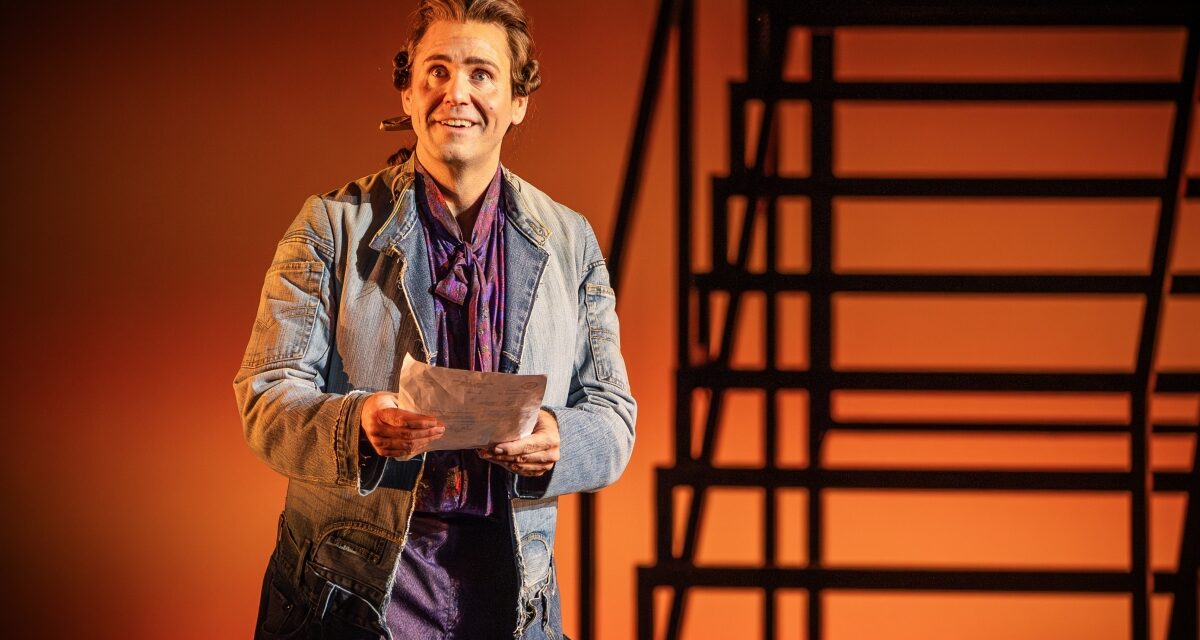
Ed Lyon gives a Candide both earnest and naïve, no gullible fool and with a constancy towards Cunégonde that is touching. Like Cunégonde the Old Lady of Amy J Payne is a convincing survivor, as in their own way are the Maximilian of Jack Holton and the Paquette of Francesca Saracino. The welcome dragoman of the sprawling tale, Dr Pangloss (Rakie Ayola) beams positivity even with the loss of a nose to sexual gratification. The deprivations that follow the discovery of the Americas have, the doctor suggests, the blessings of chocolate and potatoes.
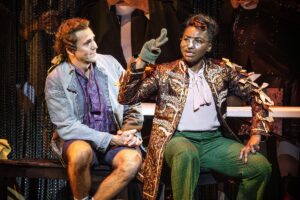
James Bonas pulls all the elements – dramatic and technical – together with a certainty of touch that allows satire to nudge comfortably with tragedy and wit. In this he is helped by singers who can act as well as they sing.
Costumes, as if grabbed out of the dressing-up box are humerous yet disruptive enough from the present day to give a flavour of the period in which the novel is set.
Finally we must mention the orchestra under Ryan McAdams. Never anything short of perfect, with a flexibility of style that does service to the Bernstein score. The final rousing chorus extols the virtue of living a simple life, tending one’s own plot, devoid of metaphysics and impossible idealism. Voltaire’s barbs would find no want of targets in our contemporary world.
★★★★★ Graham Wyles, 18 October 2025