30 – 31 January
Nigel Miles-Thomas’ solo performance, written by David Stuart Davies (a decades long devotee of the eponymous detective and editor of The Sherlock Holmes Gazette), is principally concerned with Conan Doyle’s attempts to be rid of a character that he had long tired of, in the hopes of gaining more recognition for his other literary works. In the process we are invited to reflect on the nature of reality and unreality, life and death, and all that flows from these evanescent and ultimately intractable issues.
Miles-Thomas inhabits a wide array of characters, both fictional and real, beginning with the editor of the Strand Magazine bewailing the sudden sharp decline of sales following the detective’s dramatic demise at the Reichenbach Falls in The Final Problem. Following popular (and commercial) pressure, Conan Doyle reluctantly resurrects his character, who goes on to battle crime and the forces of evil. Doyle thus fails to solve his own ‘final problem’, as his creation has taken on a Pirandellian life of its own; although in this case the author is forever bound to his character. Indeed, at the end of the play, Holmes muses over Doyle’s grave, ironically repeating the well-known aphorism that the child is most definitely the father of the man.
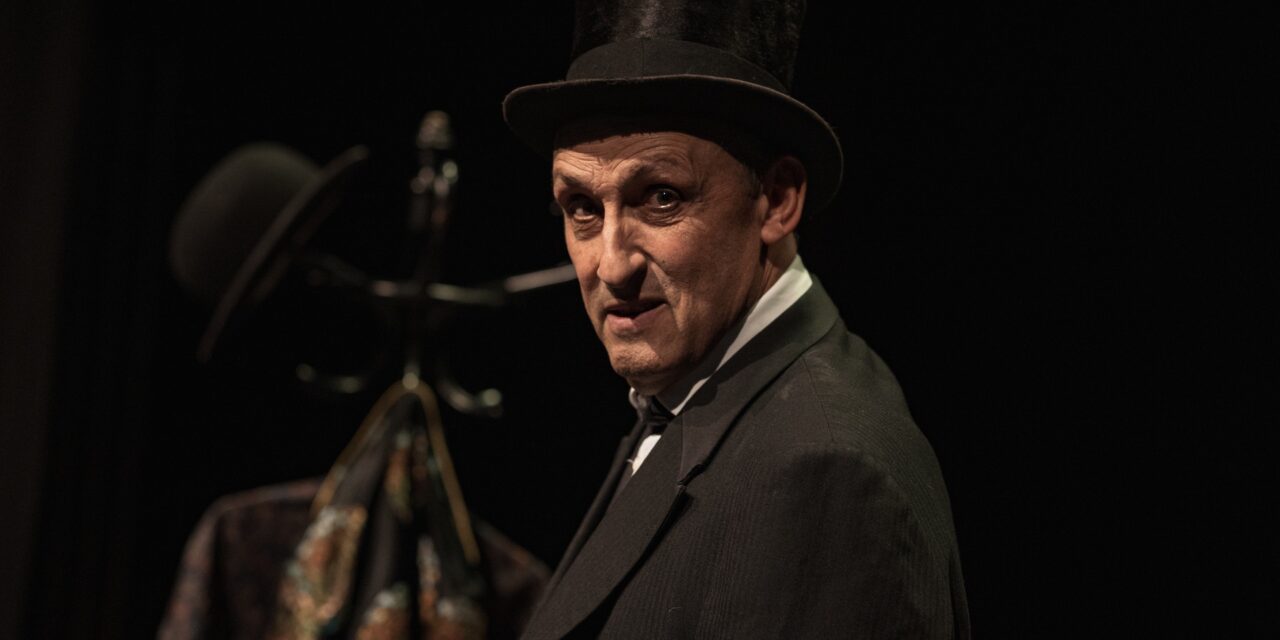
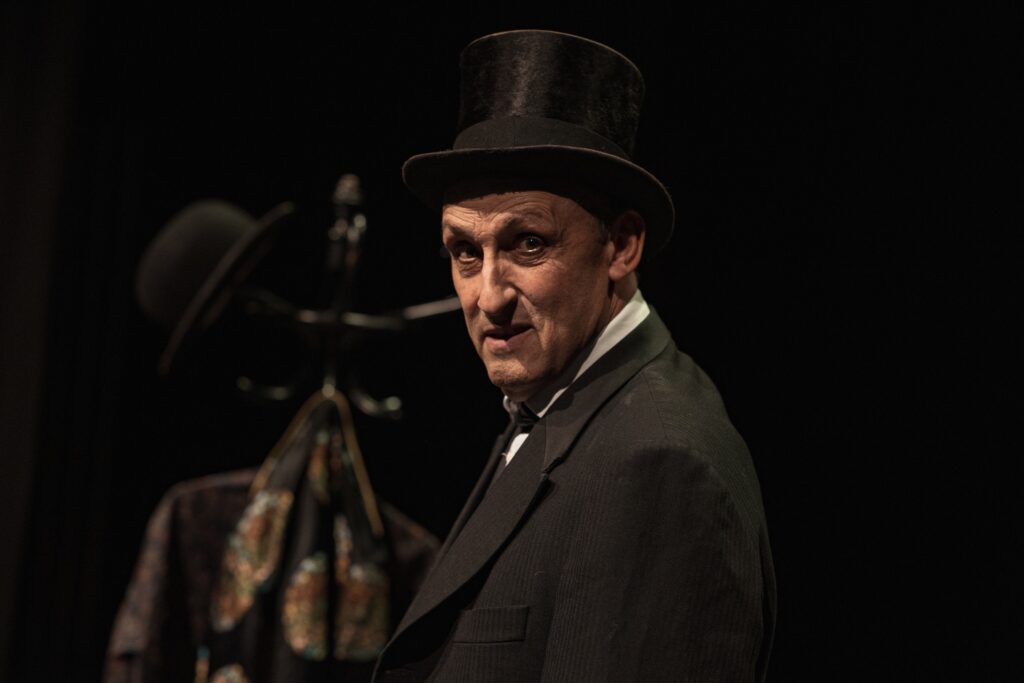
Miles-Thomas’ portrayal of probably the most famous fictional detective in literature has an air of authenticity in his gaunt, lugubrious look and lanky frame. Other impersonations are sometimes distinguished by convincing regional accents. We have, among others, Inspector Lestrade of the Yard, as an upper-working class Londoner, the Scots brogue of Doyle, and the flat Yorkshire vowels of a séance host managing the messaging from an Indian Chief. This last refers to Doyle’s vain attempts to contact his mother after her death and, of course, further underpins the theme of the play, as indicated in the title.
Physically, however, Miles-Thomas is more limited. His movements and gestures are minimal and not always entirely focused. He could perhaps find more detail to distinguish between his otherwise masterly impersonations. There is a lot of standing about, with occasional turns here and there and a bit of sitting down, but not much that truly embodies the myriad characters.
The set is divided into three fixed spaces defined respectively by a chair, a hat stand and a writing desk, where Doyle writes mostly to his mother, fretting about how to break it to her that Sherlock is for the chop. The dastardly Moriarty sports a top hat and often makes himself at home on the chair, speaking in soft measured tones, sometimes supplemented by an effectively spooky high-pitched violin. The hat stand serves mostly as a transition point between different episodes. The séance, back on the chair, is genuinely funny (‘one knock for no, two knocks for yes’ – with a tense hiatus between the first knock and the second), and sends up Doyle’s curiously irrational belief in the spirit world that stands in bizarre contrast to his detective’s cold eschewal of emotion in favour of uncluttered evidence-based intellect.
The performance may have suffered a little from the uncertainties of a first night, but has enough originality, richness and depth to mature into an excellent and concise 90 minutes, (including a not entirely necessary interval) piece of theatre. Davies’ script is sensitive, insightful and often witty. In the skilled hands of Miles-Thomas it can only grow in substance. The audience was receptive and attentive throughout, showing their appreciation with a generous round of applause.
★★★★☆ Peter Jordan, 31 January, 2026
Photography credit: Alexis Dubus Photography