
10 – 14 February
Directed by Jonathan Kent, and planned to mark 30 years since its 1995 premier, this fine production of Indian Ink now stands as a fitting tribute to Tom Stoppard, who died last November. It is replete with examples of the wit, erudition, and structural intricacy now all termed ‘Stoppardian.’ There is poignancy too, for it is a play at least in part about a writer’s death, and that writer’s legacy. There is further poignancy in the casting, for it features Felicity Kendall as Mrs Swan, the now elderly sister of a free-spirited Bloomsbury poet called Flora Crewe who died in India in 1930. Kendall was the original Flora, for Stoppard wrote the role with her, his onetime partner, in mind. Here, Flora is played with winning elan by Ruby Ashbourne Serkis.
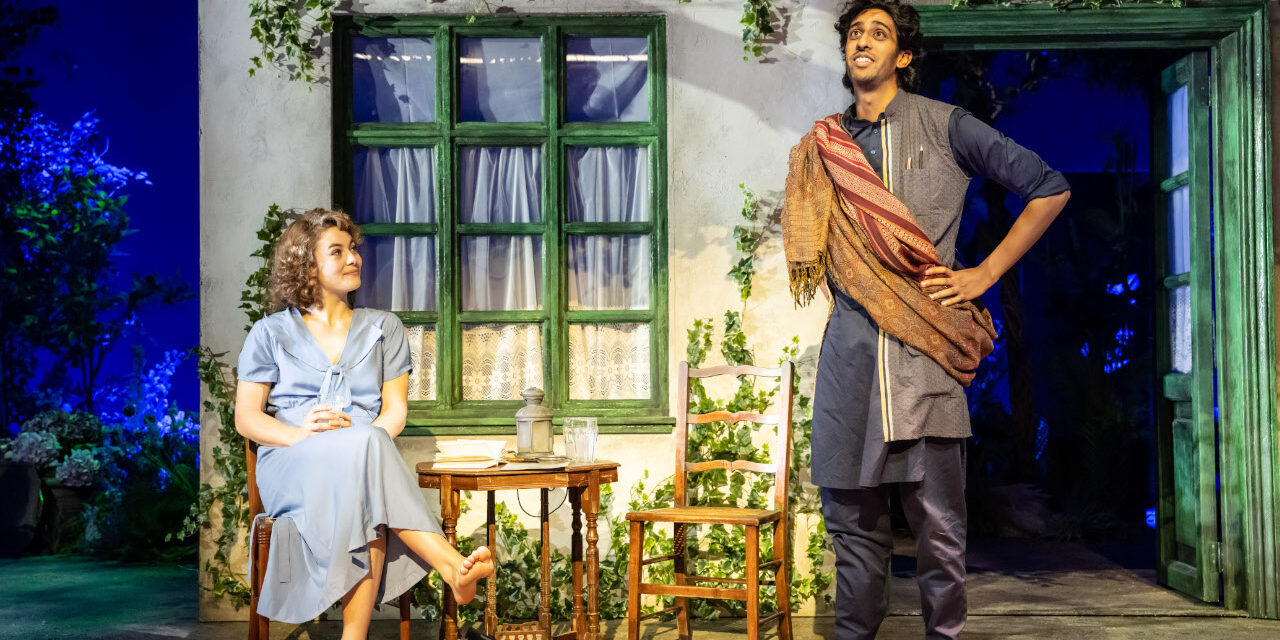
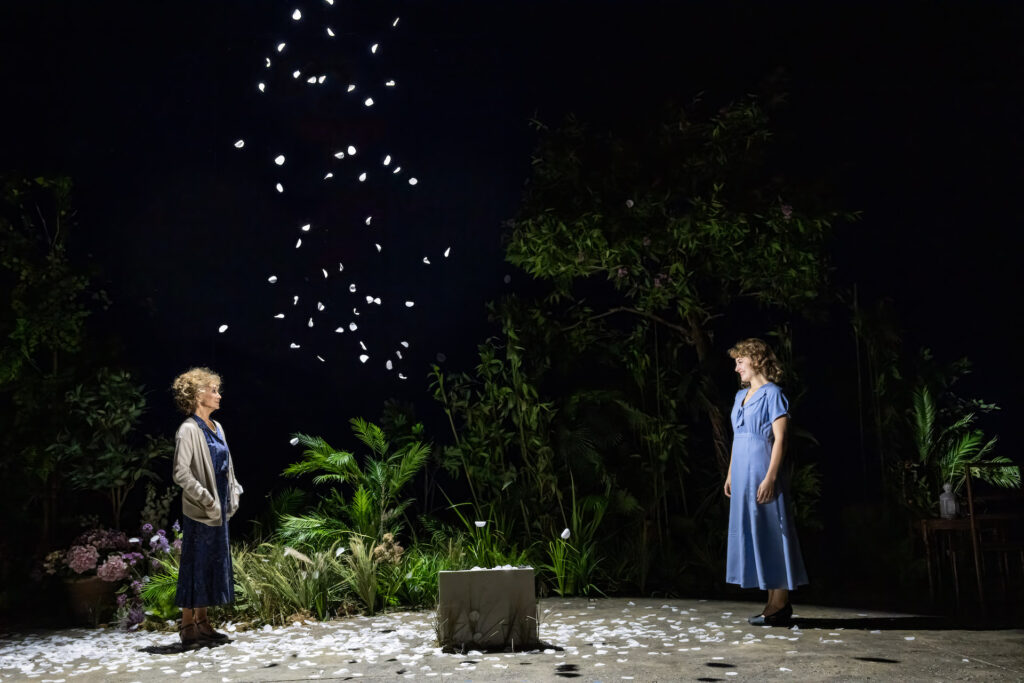
We meet Mrs Swan in her pretty London garden in the 1980s, responding with dry, world-weary wit to the bothersome questions of Eldon Pike (Donald Sage Mackay), a blundering American ostensibly keen to edit an edition of the late Flora’s letters, though his longer-term plan is surely to write a sensational biography. Flora’s name is echoed in Leslie Travers’ beautifully bosky set design, crowded as it is with colourful flowers and towered over by a tall green tree. The action shifts seamlessly back and forth from Mrs Swan’s garden to a bungalow in India, 50 years ago. Flora has come here mistakenly believing that the warm climate will be good for health – her lungs are failing – but the intense heat and the humidity of an Indian Summer threaten to overwhelm her.
Flora meets an immensely likeable young artist, Nirad Das (Gavi Singh Chera), and she agrees to have her portrait painted. Das is more than a little shocked by Flora’s forthright freedom of thought, but they grow to like each other. He is no lover of the British, so their conversations inevitably explore the deeply ambiguous relationship between their two countries. Typical of a playwright whose love of wordplay frequently bursts through, they amuse themselves creating sentences crammed with Indian terms now adopted by the British: ‘I spilled kedgeree on my dungarees and had to go to the gymkhana in my pyjamas!’ cries Flora gleefully. Such verbal sparring signals a growing intimacy, but there is much in this play left unresolved. Do they become lovers? There is a surviving nude portrait, but there are also others who may have succumbed to Flora’s considerable charms, including rather old-fashioned Englishman David Durance (Tom Durant-Pritchard) and even the expansive, Raj-loving Rajah (Irvine Iqbal). Flora’s unconventional boyishness is exemplified in her enthusiasm for the Rajah’s collection of fine motorcars, confidently identifying them all as they parade past.
Indian Ink is less heavily freighted with ideas than the much-admired Arcadia of 1993, but nevertheless one learns a great deal, including why some Indians such as the Rajah welcomed the presence of the British, and why others in less favoured positions detested them. Stoppard resolutely avoids a simplistic depiction of the issue, though many of the self-satisfied denizens of the British Club who invite Flora to a gin-swilling party are seen as braying philistines, pleased as punch to be in India, but barring any natives from entry. That there is still a complex connection between the old coloniser and those once colonised is clear. As a refugee, Stoppard spent three years as a young child in Darjeeling, and a line from this play perhaps echoes his own association with India: ‘Fifty years of independence, and we are still hypnotised!’
The play ends with a scene that packs a powerful emotional punch. Past and present merge as Mrs Swan is seen watching over her younger self, reading the inscription on her sister’s grave in India. It speaks very powerfully of the inevitability of the passage of time, and of loss.
★★★★☆ Mike Whitton, 11 February, 2026
Photography credit: Johan Persson