
24 – 26 July
An evening with the London City Ballet is to visit a new land where the language is strange yet comprehensible. It is the language of poetry; not the language used by poetry, but the effect, rather like the effect of a Chekhov play. It shows us not a literal but a poetic truth, one we recognize and apprehend without the help of the language of concepts. In short it is what art does by metaphor, extending our understanding. We may not all be dancers, but we all have bodies and can relate to the movements that describe in space something intangible.
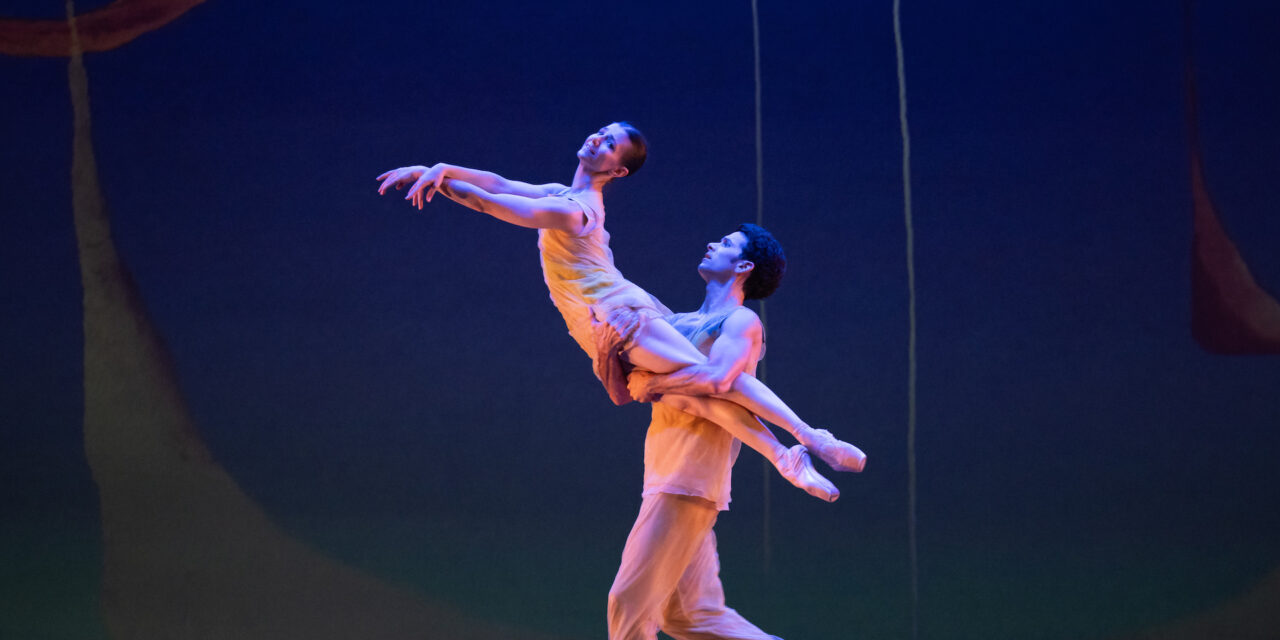
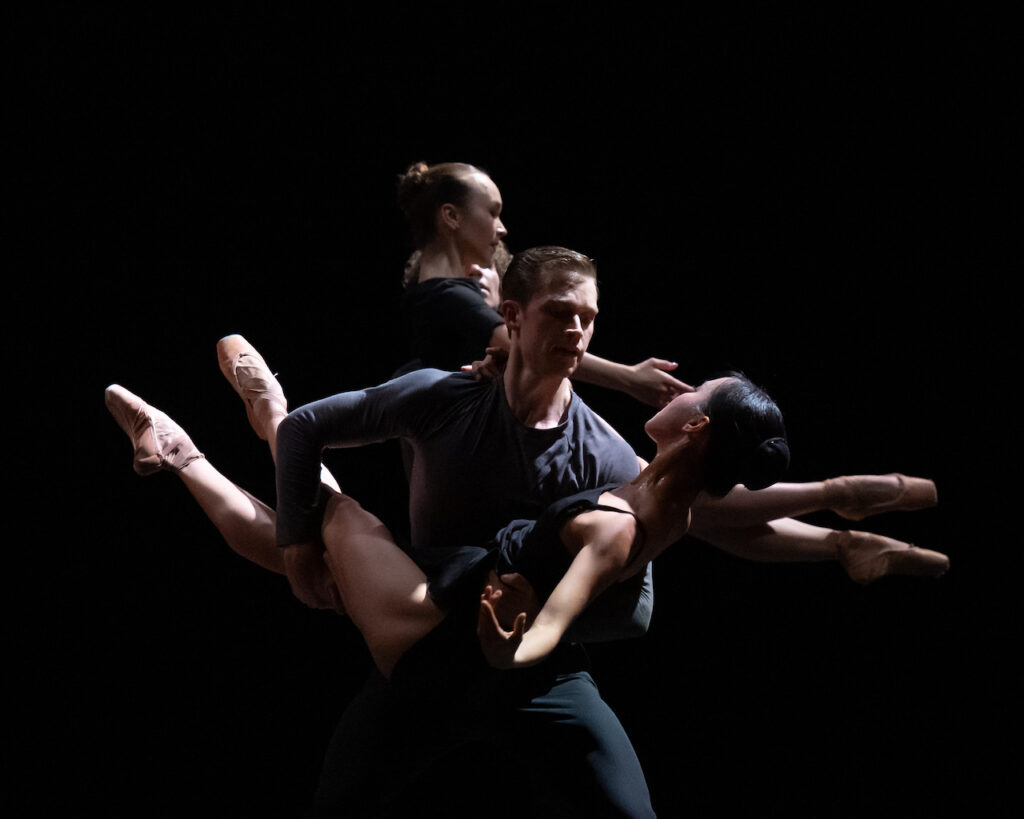
The present offering from the company are works by Balanchine, Liam Scarlett, Florent Melac and Alexei Ratmansky whose Pictures At An Exhibition interprets the piano work by Mussorgsky of the same name. The diversity of the programme allows full rein to the talents of the company, both in terms of technical skill and interpretive sensibility. Whether by happenstance or design the joy of dance sings out from the company. In Aria, for example, Constance Devernay-Laurence, looks as if she is having the time of her life and all the while giving a performance of articulate exuberance and grace. Partnered by Joseph Taylor the pas de deux shows a relaxed intimacy that finds full artistic expression in sweeping lifts and the novel expressive holds, beautifully executed, that are one of the hallmarks of the company.
The final part of the programme, which takes up the whole of part two after the interval, is an apt choice since the composition is itself an attempt by Mussorgsky to capture in music the artistic work of his friend Hartmann; sketches, architectural drawings and theatre designs, forming part of a retrospective following his death. The set and costume designs use images by Kandinsky and – in the costumes at least (by Adeline André) – appear as a deconstructed artwork that comes together in various novel ways as the dancers interact.
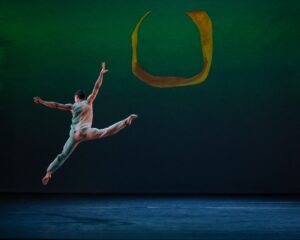
The process suggests new insights and hidden meanings in the music, which although linked by the Promenade divides into distinct sections with their own character. The finale, The Great Gate of Kiev, danced in part by facing pairs, unleashes a feeling of joy that suitably rounds off the programme.
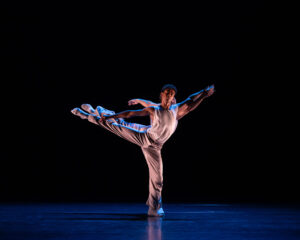
On a bare stage lighting does much to help sculpt the dancers. The lighting designers, Andrew Ellis and Mark Stanley, both resist the urge to entertain on their own behalf, but understand how to accentuate the dancers’ form.
One small gripe I had last night concerns the recorded sound level, which for the most part was too loud. I had the feeling of the dancing going on behind the music rather than in harmony with it. Down a few notches would help.
Nevertheless this was an evening of contemporary ballet at its creative and technical best.
★★★★☆ Graham Wyles, 25 July 2025
Photography credit: ASH