
30 September – 4 October
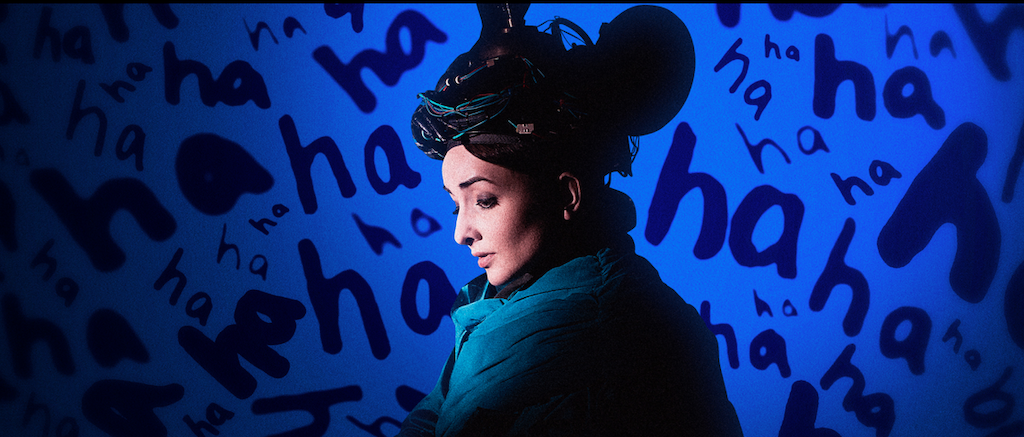
Ha ha ha. A laugh, a rasp, a communal exhale. Writer and performer Julia Masli’s award-winning solo show begins with a question: “Problem?” What follows is part stand-up, part séance, part group catharsis. It’s a piece that defies easy category and instead builds a fragile, ridiculous, and profound community out of strangers in a theatre.
At Bristol Old Vic’s Weston Studio the set is sparse, the atmosphere ethereal. Alessio Festuccia’s sound design stretches and distorts laughter until it becomes its own landscape: contagious, grotesque, sometimes frightening. Lily Woodford’s lighting artfully cuts from meditative glow to interrogative flash, while costumes (Alice Wedge, Annika Thiems, David Curtis-Ring) turn the ludicrous into philosophy: a golden limb repurposed as a mouthpiece, a helmet taking flight, and bowling shoes delivering their eternal punchline. Every element holds the line between the bizarre and the revelatory.
Masli herself is extraordinary. Her crowd work is fearless, quicksilver, and genuinely empathetic. Audience members confess everything from the banal to the existential: not knowing what to cook for dinner, being unemployed, the primordial exhaustion of simply being alive. She weaves these offerings into the fabric of the show with absurd logic and razor-sharp timing, summoning the laughter of recognition, of release, of being briefly disburdened.
Politics arrive sideways, smuggled in through the audience’s problems. Precarity, inequality, resignation: all the quiet violences of everyday life are held up to the light and spun into play to remove their sting. Masli’s genius is to make us laugh not at the suffering itself, but at the peverse systems that produce it. The ridiculousness is the point: laughter as resistance, as meditation, as collective breath.
Director Kim Noble shapes the apparent chaos with precision. Props materialise and vanish as though summoned, each charged with unexpected meaning; shackles, freedoms, fragile hopes. The show’s choreography of unavoidable interaction keeps the audience alive with anticipation: problems are demanded, solutions enacted, always with the nerve-jangling sense that you might be next. Masli’s instinct and Noble’s structure dovetail seamlessly, turning the potential volatility of crowd work into something seemingly predestined.
By the finale, the theatre vibrates with a crescendo of sampled voices; fear, laughter, fragments of confession looped into something euphoric. The dread of participation is alchemised into collective release. Ha Ha Ha Ha Ha Ha Ha closes in a blaze of absurd joy and for a moment everything feels bearable. A must see.
★★★★★ Tilly Marshall, 2 October 2025
Photography credit: Cameron Whitman