4 – 8 November
Inspector Morse is one of the most successful British television shows ever made. Voted as the best crime drama of all time by readers of “Radio Times”, and deservedly placed in the British Film Institute’s top fifty of all British TV programmes. The show which first aired in 1987 was a mainstay on our small screens for thirteen years, elevating John Thaw to the pantheon of our most recognisable and best-loved actors before his untimely and sudden death in 2002. Despite the popularity of the series, and the bestselling books by Colin Dexter which introduced him to the world, this iconic character has surprisingly never been seen on the stage. Until now.
Award-winning writer Alma Cullen collaborated with Dexter on four episodes of Inspector Morse before penning a stage adaptation in 2010. Her death in 2021 meant that she never got to see her vision of Morse performed on the stage, but director Anthony Banks has ensured that our first theatrical experience of Morse does not disappoint, offering us a version of him which is both recognisable yet refreshingly different.
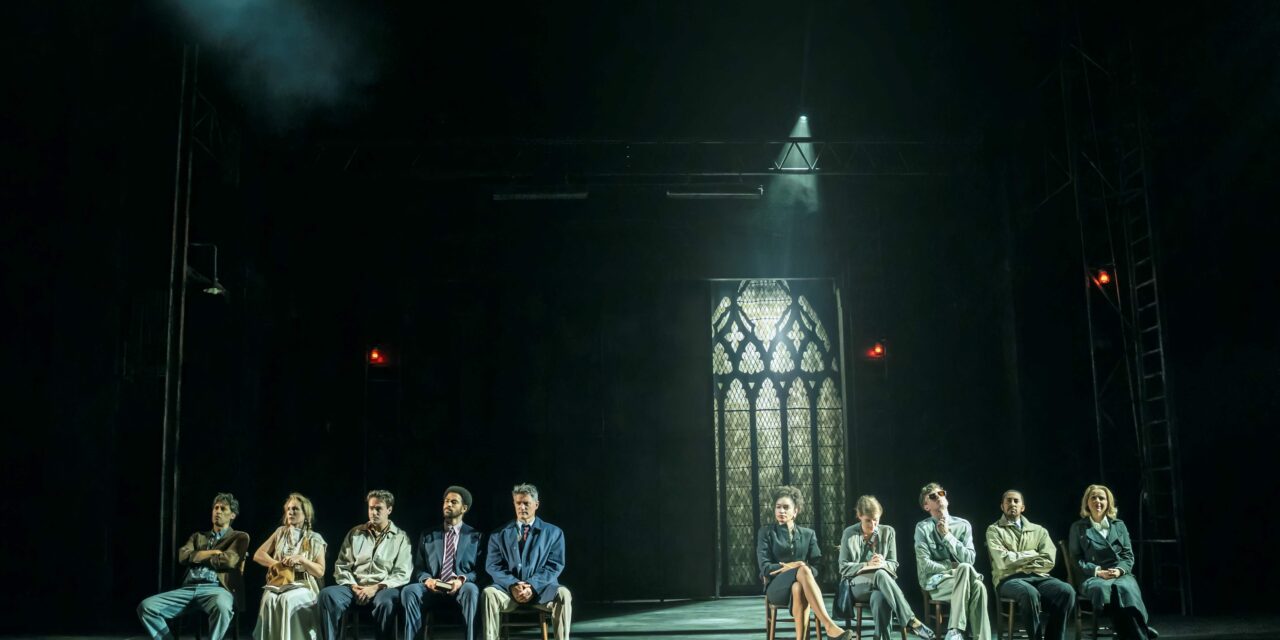
Much of the spirit of the TV series endures. Barrington Pheloung’s haunting Morse Code theme tune opens proceedings and the stage is set, quite literally: it is 1987 and a production of Hamlet is in full flow when the actress playing Ophelia dies suddenly on stage. And, of course, Morse happens to be in the audience – a clever and imaginative play-within-the-play trick which involves us all as witnesses. So begins Morse’s reluctant investigation, one which resurrects a number of ghosts from his own Oxford past.
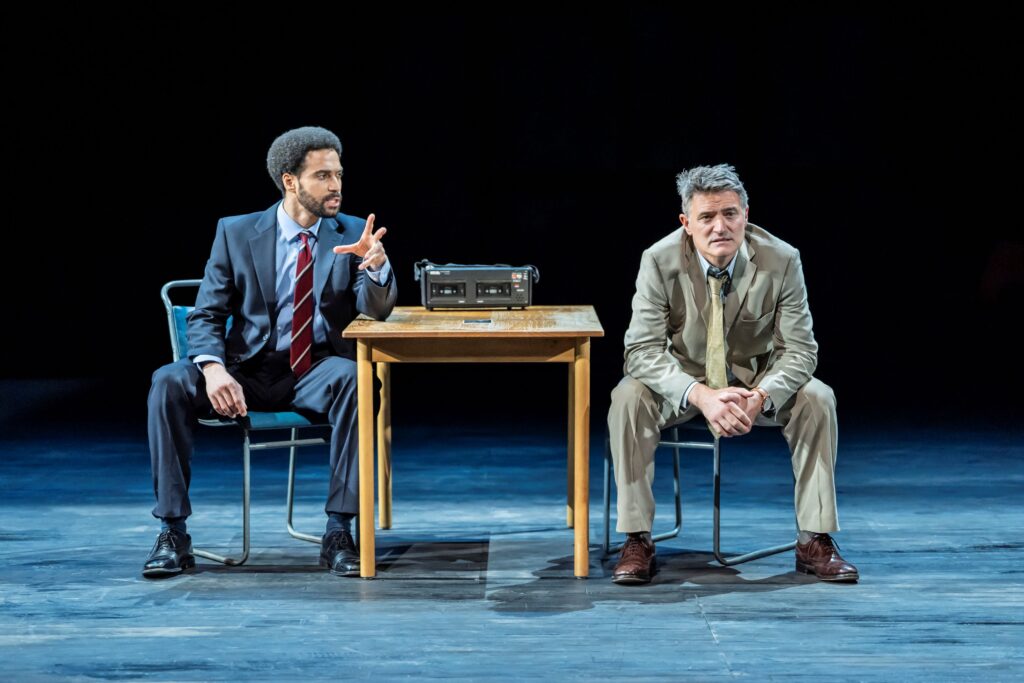
Tom Chambers resists the obvious temptation to imitate Thaw and instead puts his own individual stamp on the eponymous hero, capturing some but not all of Thaw’s mannerisms and idiosyncrasies. The lugubrious, world-weary and frustrated detective of our TV screens is replaced by a more light-hearted, animated portrayal by Chambers which also rejects the more complex and cynical characteristics as depicted in Dexter’s original tales. Morse’s foil is, of course, his sidekick DS Lewis, played equally enthusiastically by Tachia Newall, his family-oriented and more modern approach to police-work a counterpoint to Morse’s more traditional modus operandi when cleaning up the mean streets of Oxford. There is a chemistry between the two actors, even if it occasionally leans towards a comedy double-act, with ironic hints at the DNA technology and ubiquitous mobile phones of the future raising a few chuckles.
Much of this two-hour show explores familiar whodunnit tropes in the same way that a slew of recent theatrical crime dramas and murder mysteries have done. It is an enjoyable and engaging murder mystery, even if it lacks the more taut psychological edge of the television show. A flipped stage, Noises Off-style, cleverly allows us to alternate perspectives as the theatre ‘rotates’: Hamlet must face his own ghost just as Morse is forced to confront spectres from his own past as well as facing his own failings as a DCI, yet the Shakespearean allusion feels rather forced at times, superfluous at others.
How successful Morse’s first foray onto the stage will be in terms of bringing this much-loved detective to a new, younger audience remains to be seen. On the strength of tonight’s audience, this production is more of a chance for theatre-goers of a certain age to nostalgically resurrect and revisit one of our most enduring characters from popular culture, rather than to explore something new about this much-loved but well-trodden genre.
★★★☆☆ Tony Clarke 5 November 2025
Photography credit: Johan Persson