20 February – 7 March
Edward Albee’s visceral four- hander is a bold choice for the first in-house production from this theatre’s Artistic Director, Mike Tweddle. The play was first performed in New York City in 1962 and while some of the writer’s preoccupations may feel particular to its place and era, the brilliant script never feels dated. It is a monumental work, far more than the portrait of a marriage in free fall, it is also an anguished plea to all of us to face the truth about ourselves.
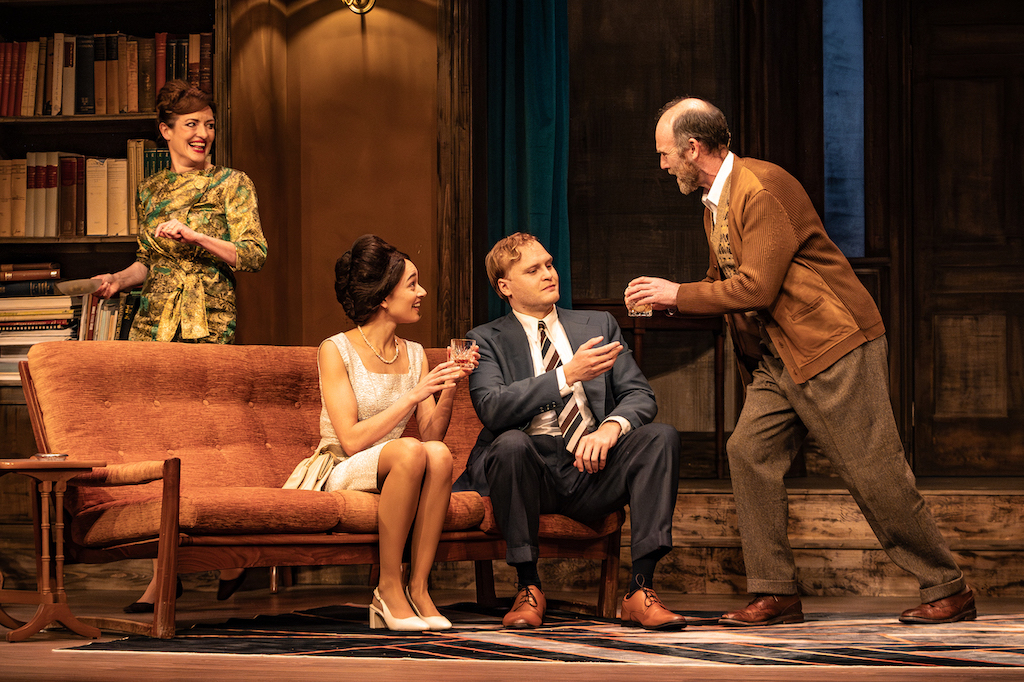
Liz Ashcroft’s single set is, at first glance, naturalistic, a drab book-lined living room on the campus of a New England college. Within the design, a smaller proscenium arch hints at the theatricality of the world on stage. Here for more than three hours, in real time, two couples drink, play games, taunt, and torment each other, revealing their deepest fears and longings. The dialogue is sharp, often fiery, quick repartee interspersed with painful stories that recreate past trauma and feel like a series of plays within the play.
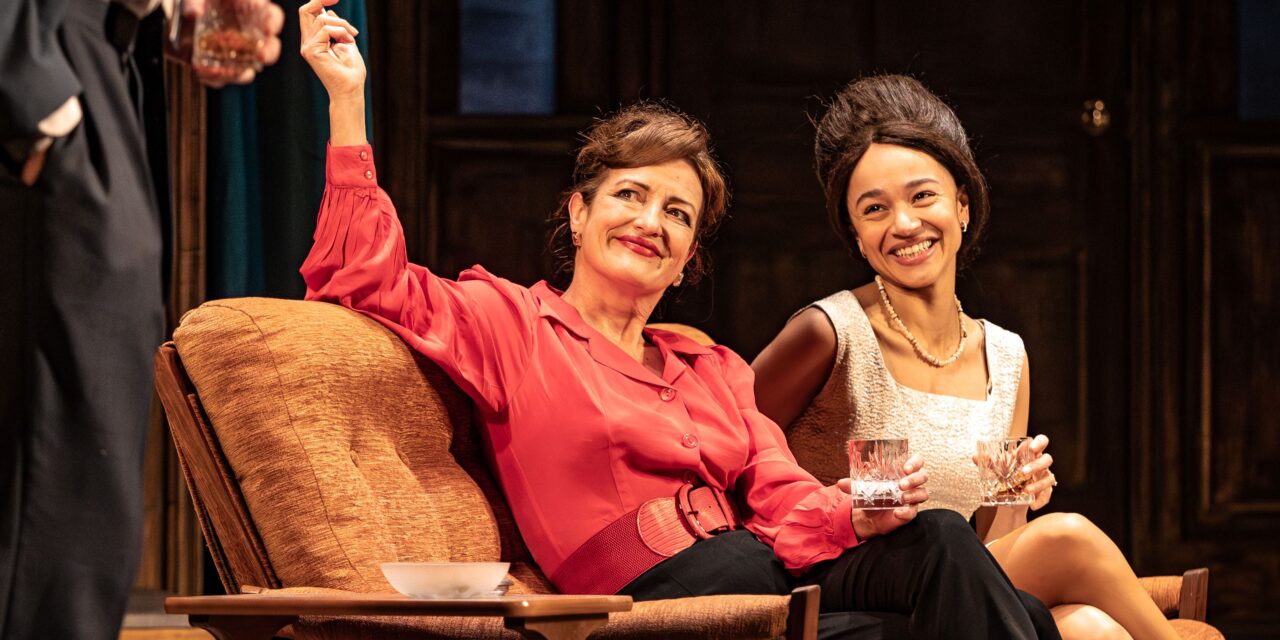
The cast is superb. Katy Stephens, as Martha, prowls like a stalking cat, arms outstretched, wrists curled like claws, ready to pounce from the moment she announces the arrival of guests at 2am. She appears in green silk, drunk and disappointed in her life, tottering on uncomfortable shoes, horribly cruel to her husband, lurching from self-pity to wild vivacity, using her visitors as allies, growing increasingly uncontrolled and predatory until the final terrible scene where her violence turns in against herself.
Matthew Pidgeon is the perfect foil as her demoralised husband, George. At first almost immune to his wife’s constant belittling, the arrival of guests gives a focus to his passive aggression. As she grows drunker and crazier, he takes control, becoming the agent of stage action like the pretend shooting, the arrival of flowers. Despite her cries for attention, he becomes the master of ceremonies, the one to organise the brutal games and tell false tales, whatever the pain to his victims.
When the younger couple, Nick and Honey, enter the mix, the chemistry never falters. Leah Haile sparkles as the nervous campus wife, mannered, respectable, speaking in euphemisms and shocked by crude language. With time and brandy, she too unravels, bursting out in interpretative dance as if shedding a skin, needy and desperate for affection, clutching her life of pretence as a protection from loneliness. Ben Hall as her husband Nick has an equally marked dramatic journey. Proud of his physical prowess and professional achievements, lurching from shy good manners to honest anger as he becomes the butt of his host’s vicious teasing and his hostess’ sexual predation.
An obvious thought about these young people, stopping by for a drink at 2am, is, ‘Why don’t they leave?’ But we soon realise they are caught in a trap, just as we, the audience, are caught in a trap. It’s an uncomfortable play to watch, tragic, but not a tragedy, comic, but not a comedy, naturalism verging on absurdity. It’s a comment on the American Dream, but also a comment for all time about the lies we tell ourselves and each other, a precursor of much of the great drama and cinema of the 1960s and beyond.
★★★★★ Ros Carne 25 February 2026
Photography credit: Craig Fuller