3 – 7 March
Forget the crime-ridden backstreets of the big cities, the most dangerous place in the UK to live must surely be Midsomer County, setting for Caroline Graham’s murder mystery novels which, nearly thirty years ago, exploded onto our small screens with Midsomer Murders: The Killings at Badger’s Drift. Starring John Nettles as Detective Chief Inspector Tom Barnaby and Daniel Casey as his sidekick, Detective Sergeant Troy, the pilot episode was the highest-rated TV single drama of 1997. Three decades, twenty-four series, 140 episodes and over four hundred violent murders later, the show still endures, albeit with a different cast, highlighting our seemingly insatiable desire for a good old-fashioned whodunnit.
The latest chapter in the ongoing resurgence of the murder mystery genre sees another hugely popular television franchise adapted for the stage, prompting the same dilemma faced by similar theatrical reboots such as House of Ghosts, Inspector Morse’s stage debut last August: to what extent do you simply copy the original? Writer and director Guy Unsworth has opted to give the franchise a camply comic treatment without sacrificing the intrigue needed to keep us fully engaged; it’s a clever balancing act.
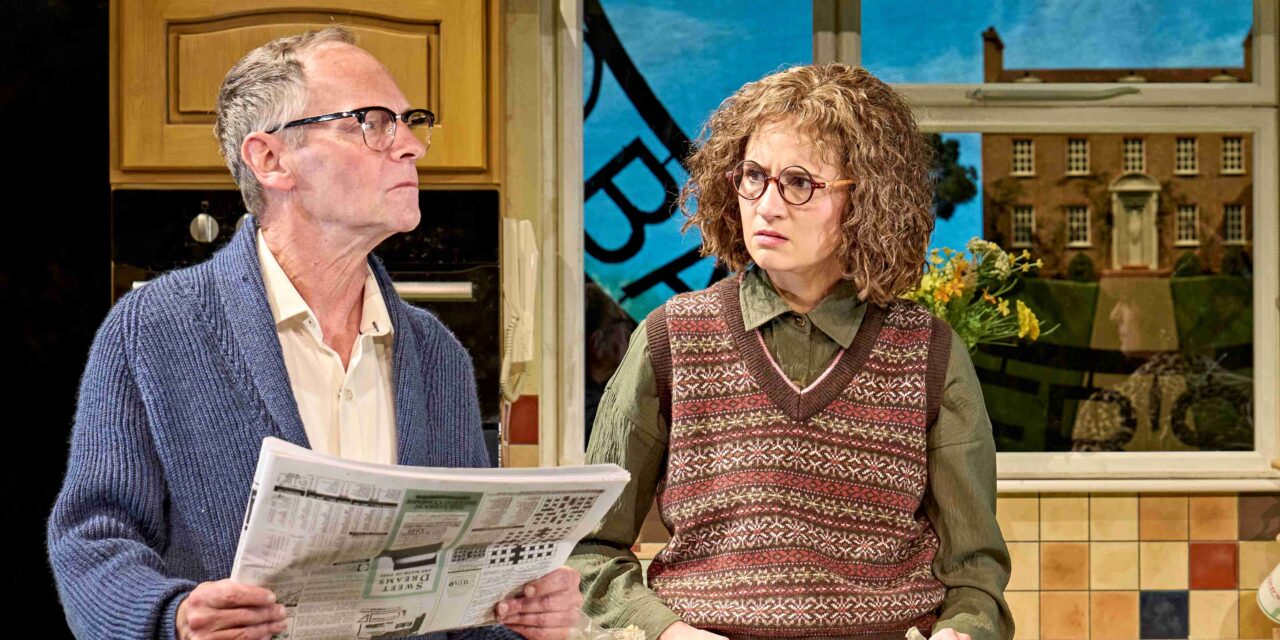
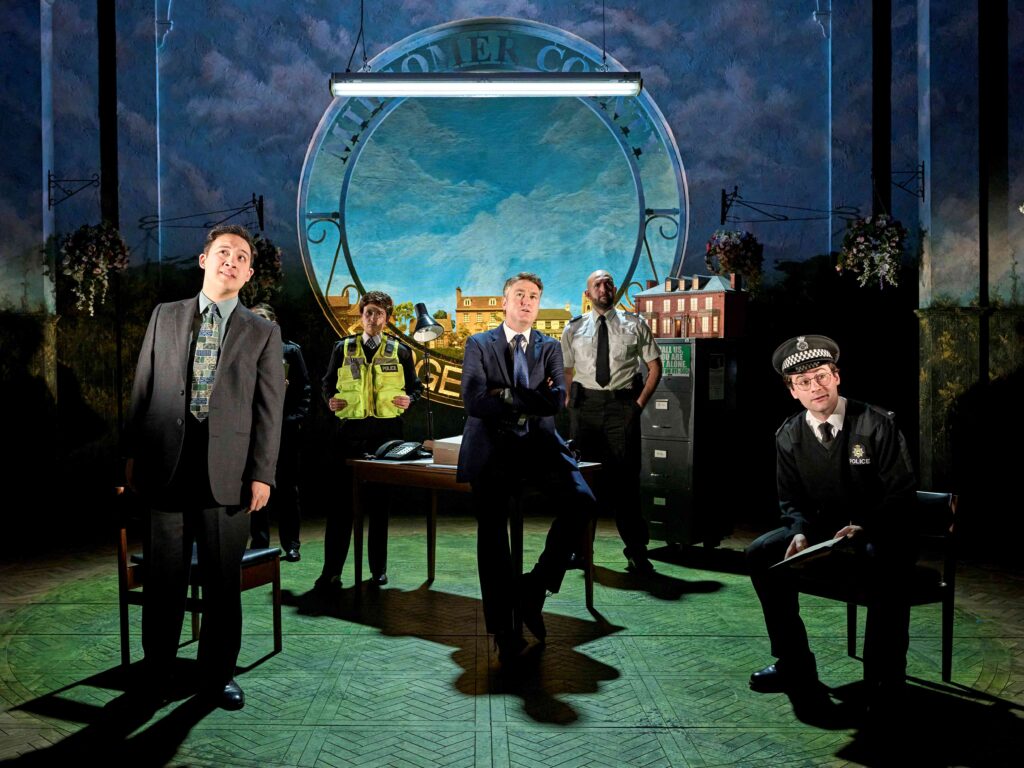
Casey makes a welcome return to the fray, but now promoted to the lead role as Barnaby, clearly endearing him to fans of the original series who, on the strength of tonight, comprise a significant proportion of the audience. Unburdened by the emotional baggage which afflicts other, more cynical, world-weary detectives, Casey’s Barnaby is a gentle breath of fresh air, aided by a witty, slick script and an equally enthusiastic sidekick in James Bradwell as Troy. They are joined by a strong supporting cast of recognisable theatre stalwarts including the impressive John Dougall and Julie Legrand, but in truth this is a hardworking ensemble who all showcase their considerable versatility with multiple additional roles. There is some wonderful overacting which fits perfectly with the show’s more tongue-in-cheek, parodic feel despite the surprisingly brutal events which unfold around them in Badger’s Drift.
The picturesque locations of the Chilterns and the Thames Valley are very much part of the TV show’s appeal. Despite the limitations presented by a stage, designer David Woodhead has successfully recreated elements of these quintessentially idyllic yet lethal English villages with a beautiful set, staging and props sliding gracefully into position and with a clever multi-purpose window upstage which offers a variety of theatrical applications and views.
All the expected generic tropes are here: a gruesome murder predictably early in the piece; a shoal of red herrings; a village full of suspects, dark secrets and hidden pasts; a sharply rising body count and, thanks to original composer Jim Parkin, the hauntingly sinister theme tune played on a theremin which weaves its way in and out of musical director Max Pappenheim’s score. This feels as comfortable and familiar as the cosy crime genre can get, all delivered with a huge sense of fun and self-knowing irony. The greatest strength of this show is that it doesn’t simply rehash an old story, rather it is an affectionate homage to, as well as a variation of, this most enduring and endearing of entertainment genres. Fans both young and old, familiar and uninitiated alike, will find much to enjoy.
★★★★☆ Tony Clarke 4 March 2026
Photography credit: Manuel Harlan