4 – 13 September
Patricia Highsmith’s Tom Ripley is one of literature’s most enigmatic characters. A narcissistic, opportunistic and ruthless psychopath, yet one who is simultaneously vulnerable, charming and suave, he features in five of Highsmith’s novels with The Talented Mr Ripley, the first and most well-known, published in 1954. Netflix’s acclaimed Ripley is the latest in a slew of screen adaptations, most famously of which is Anthony Minghella’s lavish 1999 Oscar-nominated offering which shapes many people’s perception of the story. Yet this production, opening here in Cheltenham ahead of a national tour, sees this darkly disturbing tale on stage for the first time, with Mark Leipacher at the helm.
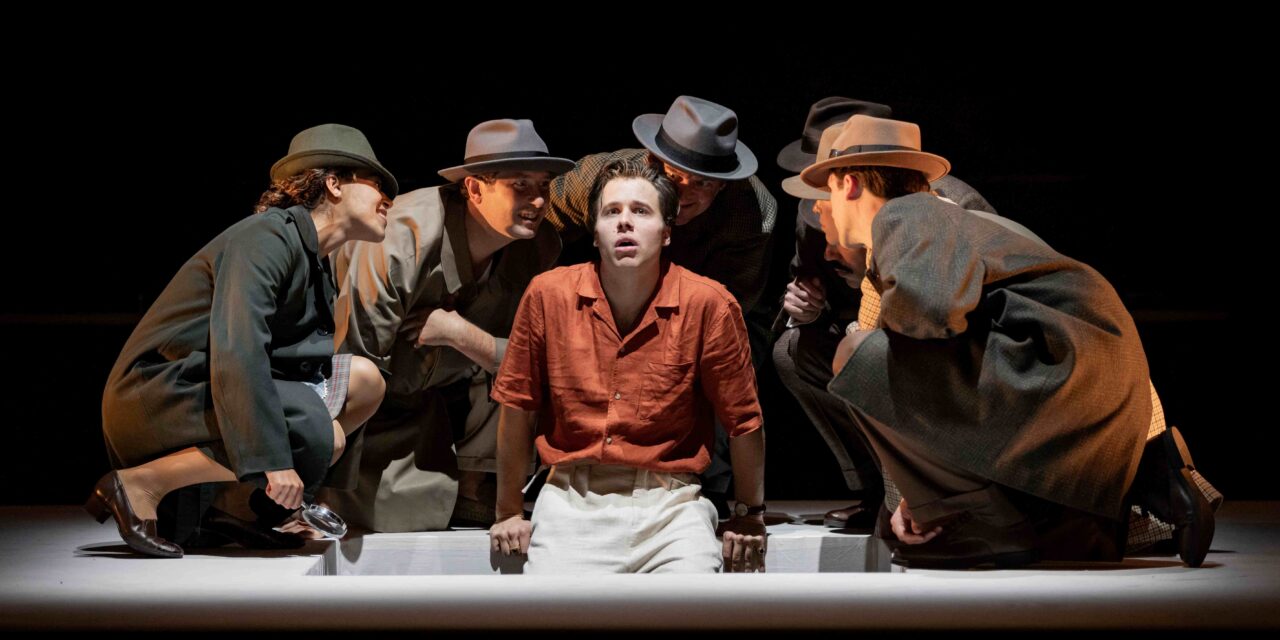
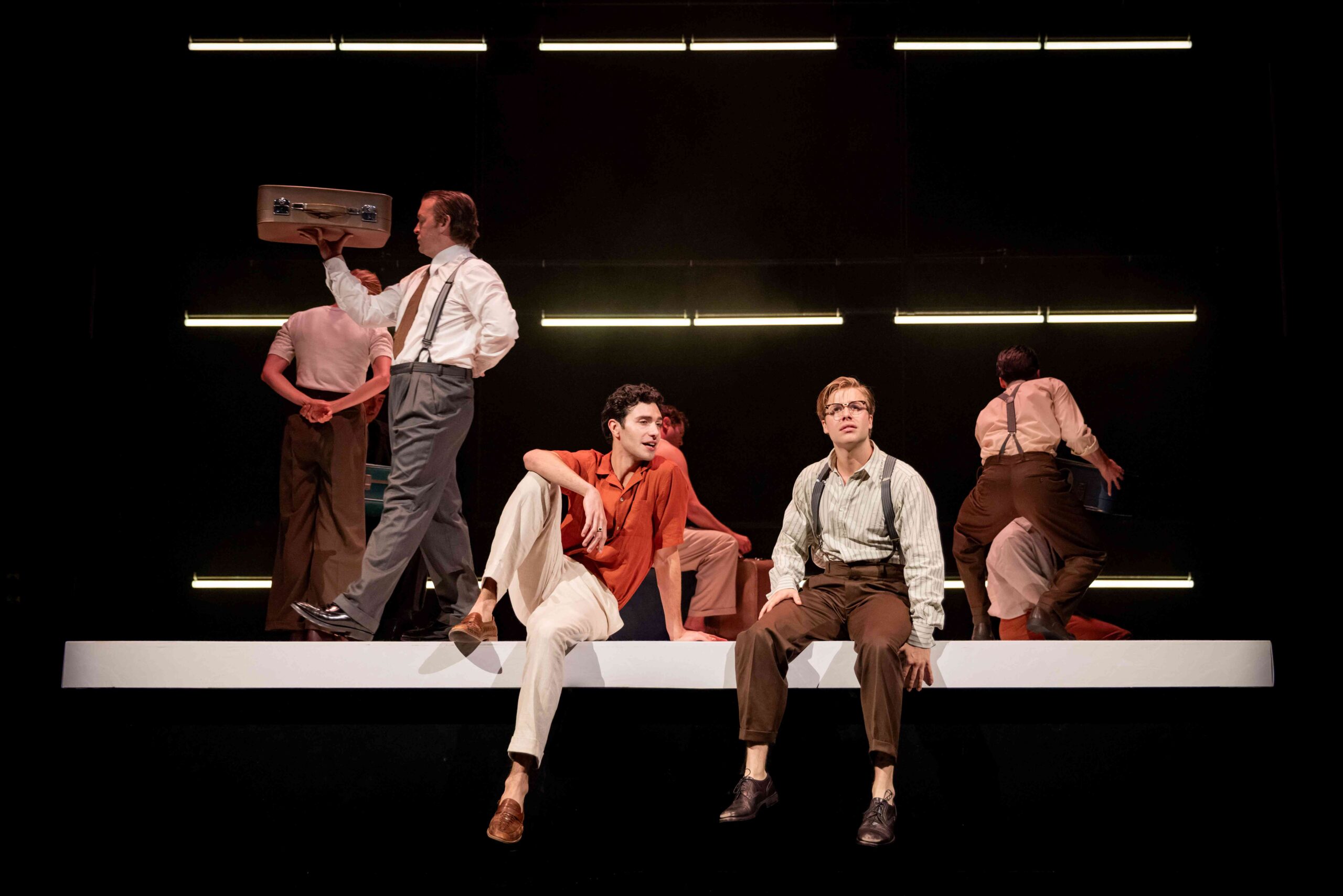
The Faction, an award-winning, international theatre ensemble, specialise in creative and inventive interpretations of classic tales through a stripped-back aesthetic allied to the energetic physicality of their ensemble cast. For a story which is set largely in exotic locations such as the Italian Riviera, Rome, New York and Venice, the staging and set design is surprisingly minimalist, with the curtain rising on an elevated, plain white square platform onto which, and within which, the audience’s imagination is invited to project multiple scenarios and settings – a boat, a bar, a beach, a bedroom – with an uncluttered but highly effective simplicity.
The talented Mr Ed McVey elevates the entire proceedings with a skilful and varied show of subtlety and acting stamina as the eponymous protagonist, rarely leaving the stage in a performance which stretches to well over two hours, and he does so while also successfully capturing all the nuances, complexities and frenetic paranoias of Ripley’s character. He is ably supported by both Bruce Herbelin-Earle as charismatic playboy Dickie, the object of Ripley’s obsession and by Maisie Smith as a guileless, naive Marge, yet it is the ensemble actors who also impress, collectively breathing life into Ripley’s conflicted conscience with some clever and artfully choreographed sequences, echoing his thoughts but seemingly guiding him too. The show is not without humour: McVey’s Ripley regularly breaks the fourth wall with some comic asides in the first act as we come to appreciate just how cunning and devious his character really is, all the while gaining our sympathies. Whilst initially confusing, the drama is occasionally and abruptly halted by the director’s “Cut!”, complete with lights up, until we realise that what follows are possible alternative scenarios playing out in Ripley’s consciousness before the narrative continues. It’s an innovative, bold choice and – once you get used to it – one which invites insight into the inner workings of a psychopath’s mind.
For a play with so much dialogue, this is a long production, particularly in the second act, but the increasingly taut and tense plot, in which we find ourselves almost rooting for the serial-killing sociopathic Ripley despite his murderous machinations, keep us engaged through to the end.
“Do you ever have the feeling you’re being watched?” Ripley asks us knowingly, and somewhat tongue-in-cheek, several times during the show. Seventy years on from the novel’s publication, and in an age of 24-hour surveillance, intense media scrutiny, celebrity culture and the pervasive influence of social media, this is a fresh and inventive take on a story which still has much to say about loneliness, identity and aspiration. It is a play for the Instagram generation, and for us all.
★★★★☆ Tony Clarke 11 September 2025
photographers credit @ Mark Senior