3 November
Written shortly after the horrors of the Second World War, the Rape of Lucretia is Britten’s attempt to come to terms with the depravity that period of human history represents. His aim seemed to be the expression of some of the worst traits of human nature. Using the foundational myth from antiquity regarding the overthrow of the last Roman King, the tyrannical Tarquin the Proud and the establishment of the Roman Republic, Britten and his librettist, Ronald Duncan, ask the question with which the opera finishes, “Is this all?”. The male chorus (William Morgan) offers the simplistic answer that our moral depravity can somehow be salvaged in Christ’s blood. Similarly the Christian idea that love and beauty are transformed into Grace is a peculiarly limp idea given the context.
Given that the opera is from the fairly recent past the notion that a woman might commit suicide after being consumed by a loss of purity is one that draws little understanding and sympathy. Interestingly, Duncan’s original script had a Lucretia who was attracted to Tarquinius. In that scenario the idea of, “No means no”, is a more potent idea to our modern sensibilities, and the resultant feelings of guilt are far more understandable. Nonetheless what we can directly relate to is the notion of unchecked power and the manipulation of the narrative. Tarquinius clearly has to go whilst Junius (Edmund Danon) is Iago and Mark Anthony rolled into one.
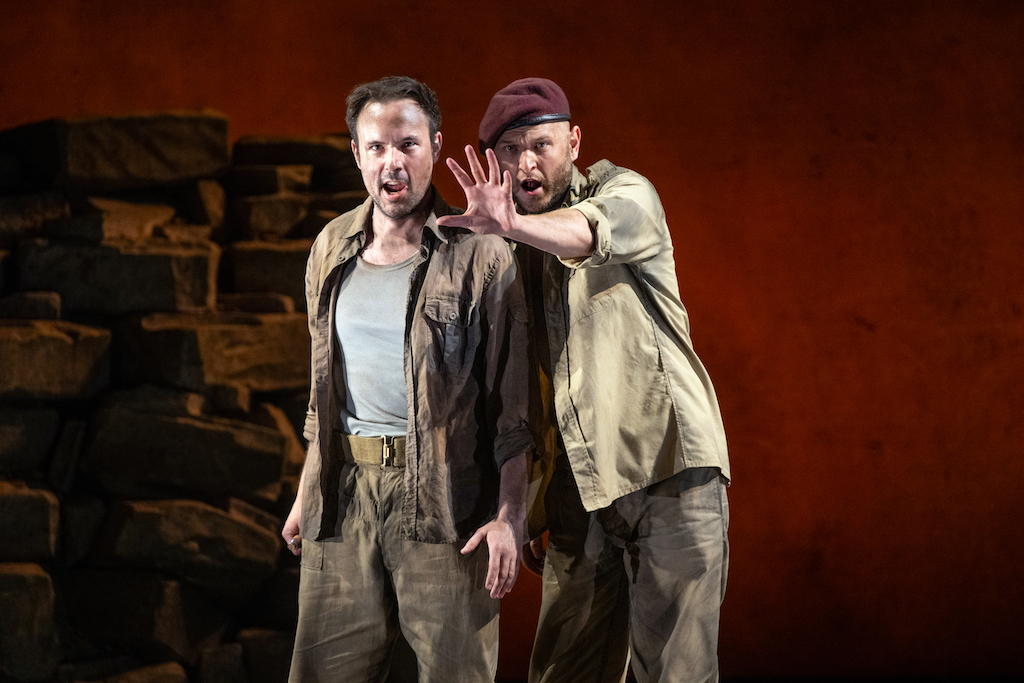
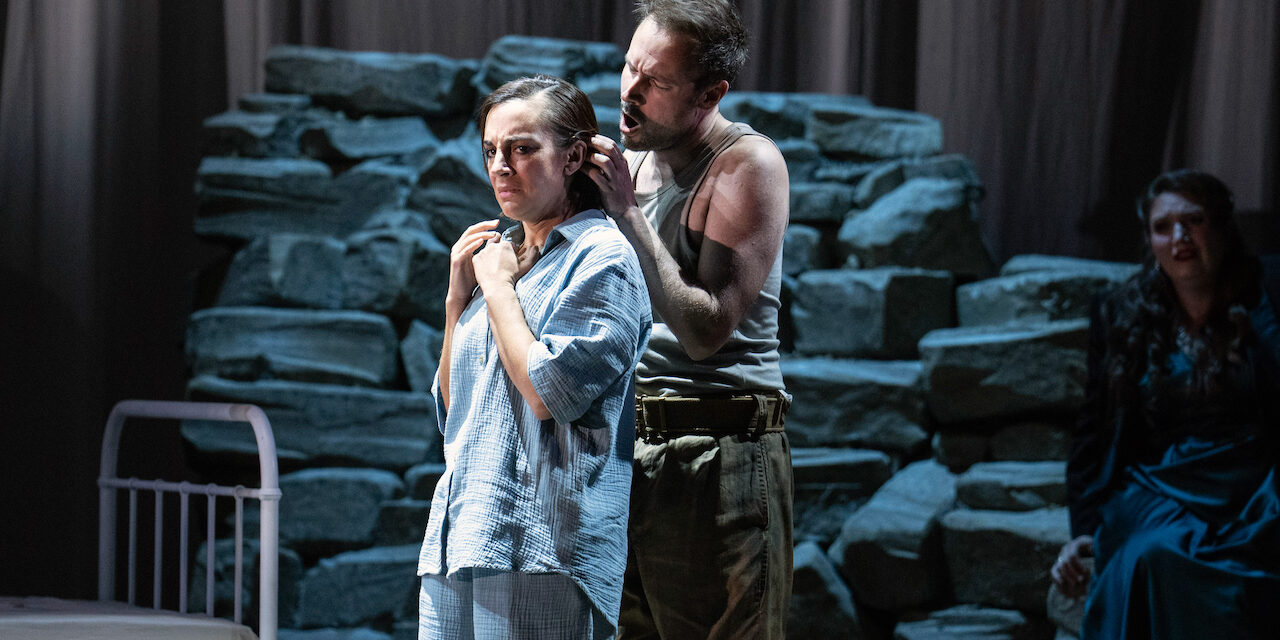
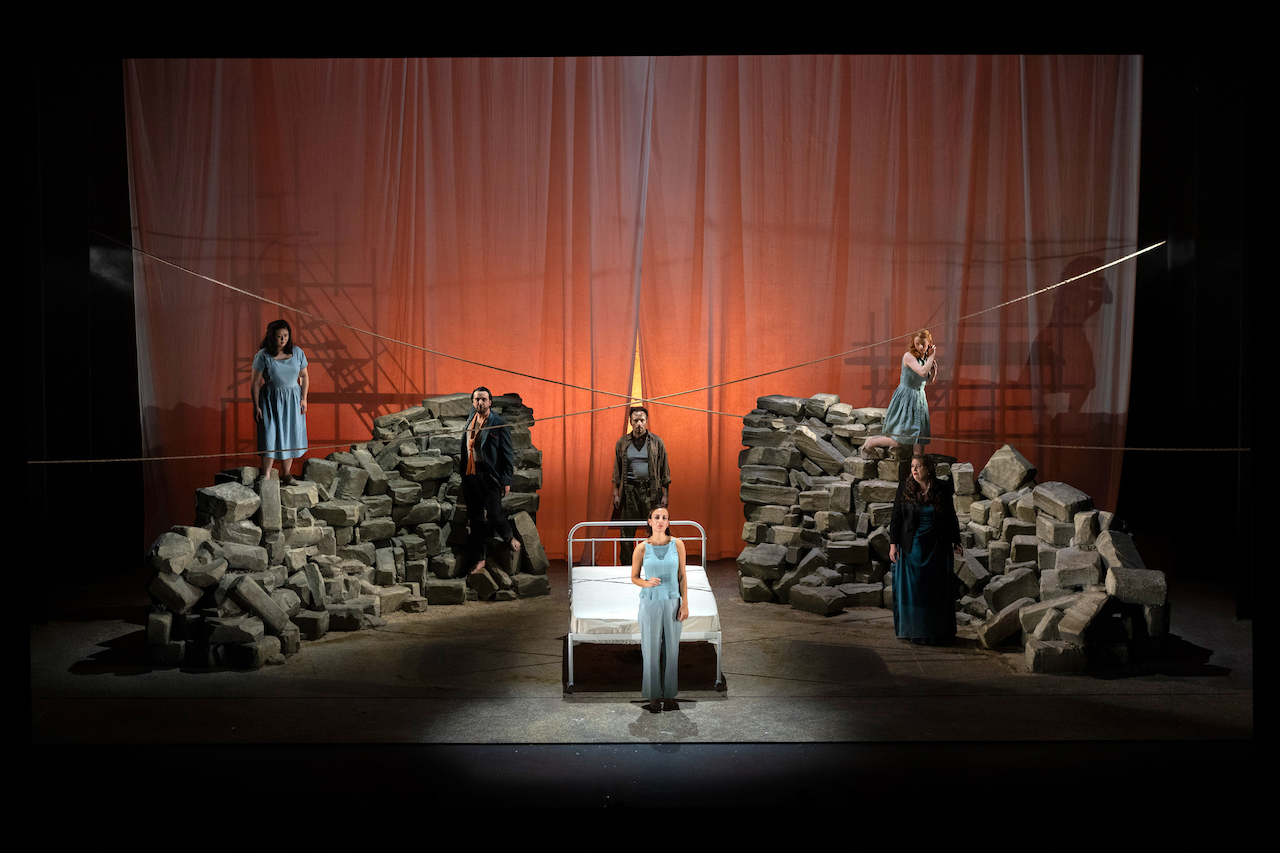
However, metaphysics and morality to one side, we are left with the music and the performances. I found myself thinking how much parts of the score resembled a contemporary soundscape with the use of Britten’s modern tonal palette. The score trips around, one moment delicate then in a blink forceful, something that is partly made possible by having the chorus of one male and one female looking back on events through the eyes of hindsight from a different time-zone, not to a transitional Rome, but a more recent scarred urban landscape. Clare Presland (Lucretia) the moral backbone of the story, moves easily from sensitivity to fear to outrage in a performance of great clarity. The unsympathetic male characters, Tarquinius (Kieran Rayner), and Junius who was given a congratulatory pantomime boo at the curtain call, were perfect foils to her crystalline purity.
The pared-down orchestra under Gerry Cornelius is a quality act in itself.
Although the opera refers to a passed epoch there are enough contemporary echoes to give it a thoroughly modern feel.
★★★★☆ Graham Wyles, 4 November 2025
Photography credit: Richard Hubert Smith